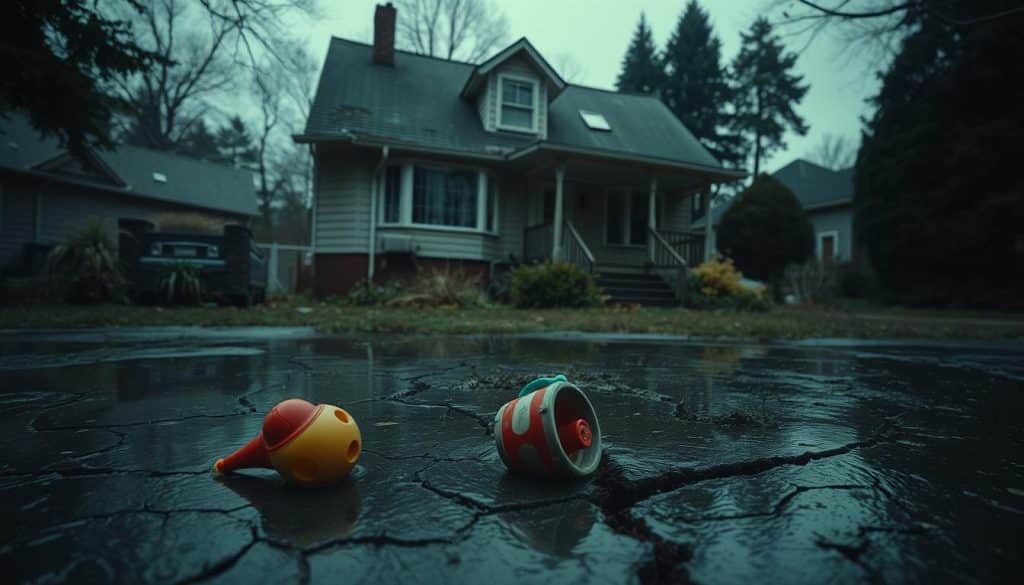
Ever wondered why your yard turns into a swamp after a heavy rain? It’s not just about your garden. It can also harm your home’s foundation. Knowing what causes yard drainage issues is key for homeowners.
Problems like this come from many sources. These include soil type, how you landscape, and local weather. Spotting these issues early can save you from expensive fixes. It also stops bigger problems that could damage your property.
Things like compacted soil and clogged gutters can keep water in your yard. This can be up to 80% of the time. It’s bad for your plants, causing root rot in about 30% of them.
It also puts your home’s foundation at risk. The extra water pressure can be dangerous. This article will look at ways to fix these problems. We want to keep your property safe and looking good.
Key Takeaways
- Poor yard drainage can lead to water retention of up to 80% in the soil.
- Compactors and improper grading can limit oxygen access for your plants, causing root rot.
- Flooding issues can decrease property value by up to 25% if left unresolved.
- Regular gutter maintenance can reduce flooding-related issues by 40%.
- Effective drainage solutions can significantly decrease repair costs associated with water damage.
Understanding Yard Drainage
Yard drainage is key to keeping outdoor spaces healthy and stable. It involves managing excess water to avoid flooding and damage to homes. A good drainage system keeps water away from your property, protecting your landscaping and foundation.
Definition of Yard Drainage
Yard drainage means controlling water in outdoor areas. It needs a slope of 2-3 inches per 10 feet for water to flow well. In places like Georgia, with clay-heavy soils, it’s even more important to manage water well.
Homeowners should watch out for standing water and drainage backflow. These can harm your yard’s health.
Importance of Proper Drainage
Proper drainage is very important. It stops water from gathering around your foundation, which can cause big problems. This includes flooding in basements and foundation cracks.
Stagnant water also attracts mosquitoes, which is a worry for homeowners. Keeping gutters and downspouts clean helps prevent overflow and improves drainage. Taking care of your yard drainage protects your home and keeps your landscape healthy.
Common Signs of Drainage Problems
Spotting drainage problems early can prevent big damage and expensive fixes. Look out for signs like standing water in your yard and water around your foundation. Catching these issues early helps fix yard drainage problems before they get worse.
Standing Water in the Yard
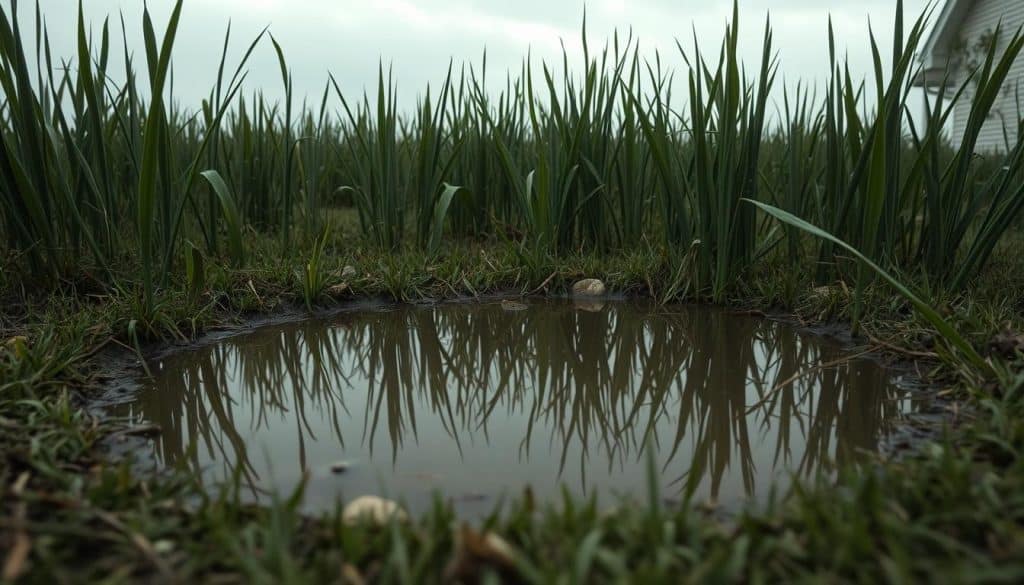
Standing water after rain means you might have drainage issues. A healthy lawn should dry out in 24 to 48 hours. If it stays wet, it could mean low spots or compacted soil. These problems can cause fungal growth or soil erosion.
Water Pooling Around the Foundation
Water around your foundation is a big risk to your home. It can cause basement flooding and foundation cracks. Fixing these problems quickly is important to avoid costly repairs and damage.
Factors Contributing to Poor Drainage
Knowing what causes poor drainage is key to managing your yard well. Soil type and composition are major factors. For example, clay-heavy soils absorb water slowly, leading to waterlogged areas. This makes fixing drainage issues harder.
Soil Type and Composition
Soil type greatly affects how water is managed. Soils with a lot of clay absorb water poorly, causing water to stay in the yard. On the other hand, sandy soils drain water well, taking up to 4 inches per hour. Using the wrong soil can cause water to pool, leading to foundation problems.
Landscaping and Grading Issues
Landscaping problems can make drainage worse. If your yard is not graded right, water can flow towards your home. About 35% of drainage issues come from bad grading. Proper grading helps water flow away and prevents flooding and damage.
Excessive Rainfall
Heavy rain also affects yard drainage. Drainage systems can get overwhelmed during big storms. For example, sump pump failures can raise flooding risks by 75%. Keeping your drainage system in good shape helps handle heavy rain better.
Impact of Drainage Issues on Homes
Poor yard drainage can cause big problems for homeowners. At first, these issues might seem small. But they can get worse over time. Water getting into basements is a big problem.
This water can lead to mold and mildew. It makes indoor air quality bad. It can also cause health problems.
Basement Water Ingress
Basements are very prone to water problems. Standing water in the yard makes them even more vulnerable. About 60% of mold in basements comes from water.
Drainage systems that aren’t well-maintained make things worse. Even small mistakes in yard grading can increase the risk. During heavy rain, about 25% of homes get water in their basements.
Foundation Damage
Foundation damage is another big problem from bad drainage. Moisture can erode the foundation, causing cracks and buckling. This happens in up to 15% of homes.
Homeowners need to take care of their drainage to protect their homes. Blocked downspouts and gutters are a big part of the problem. Keeping these clear can prevent up to 70% of damage.
Solutions for Yard Drainage Problems
Fixing yard drainage issues needs a careful plan. It involves using different methods. These methods help keep water away from your home and garden. Installing a French drain and using catch basins are key steps.
Installing a French Drain
Installing a French drain is a top choice. It moves water away from where it pools. This stops water from soaking the soil around your foundation. Digging a trench up to 2 feet deep is hard work but worth it to avoid flooding.
Utilizing Catch Basins
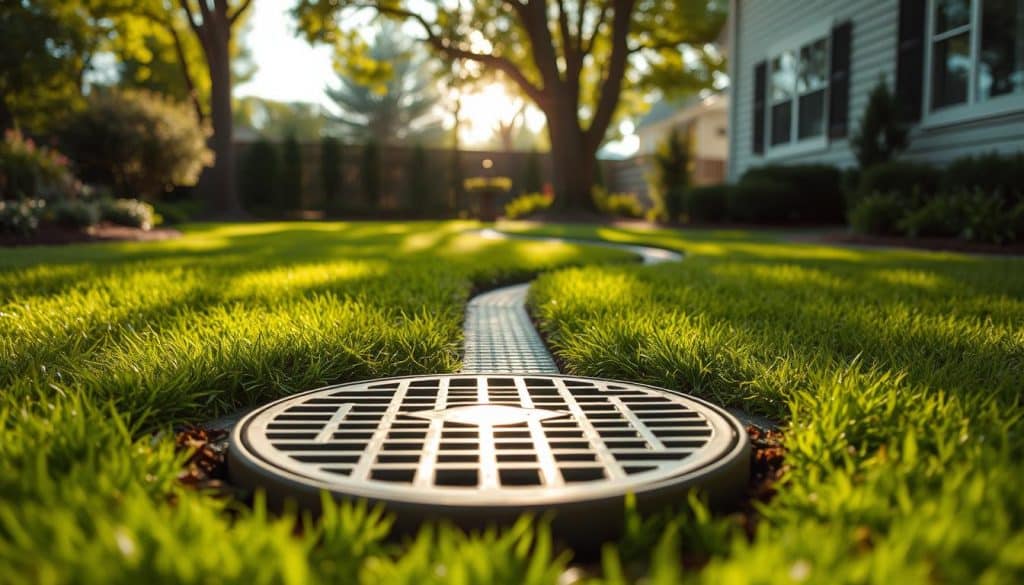
Catch basins are also vital for managing water. They collect extra water and send it into underground systems. This keeps water from your property. Though installing them is tough, it’s worth it to avoid waterlogged yards and foundation damage.
Creating Effective Drain Systems
Building a good drain system needs a detailed plan. It includes downspout extensions and gravel beds. Downspouts should go at least 5 to 10 feet from your foundation to avoid flooding. Gravel beds help soak up runoff and stop soil erosion. Together, these parts make a strong defense against water buildup.
Drainage First: Your Cost-Effective Option
Homeowners often look for ways to make their properties safer and more durable. Drainage First is a cost-effective choice compared to traditional waterproofing companies. It focuses on solving yard drainage problems before they become expensive. This approach helps prevent water from getting into homes, saving resources and keeping areas dry.
Comparing Drainage First to Waterproofing Companies
Drainage First offers a unique method that focuses on external drainage solutions. This approach is not only cheaper but also more effective at managing water. Instead of using expensive interior systems, homeowners can use simple yard drainage solutions. This reduces the risk of moisture problems.
Many discussions about waterproofing companies highlight Drainage First’s proactive strategies. These strategies create a strong foundation for property care.
The Importance of External Solutions
External drainage solutions are key for any property, more so in rainy areas. A well-kept yard stops moisture buildup and ensures water flows away from the foundation. Techniques like proper grading and drain installation are essential.
Investing in these solutions improves the yard’s function and looks. This approach often offers more value than traditional methods that may hide problems. By choosing Drainage First, clients get affordable and effective drainage solutions that are well-planned and executed.
Advantages of “Drainage First” Approach
The “Drainage First” approach helps homeowners with yard drainage problems. It focuses on stopping water from entering the home. This way, homeowners avoid expensive repairs inside their homes.
By using good drainage methods, homeowners save money. They also make their homes last longer.
Preventing Water Entry Before Interior Solutions
Preventing water entry is a big plus of the drainage first method. Homeowners use French drains and adjust the yard’s slope. This stops water from getting into the home.
This approach means less need for costly repairs inside. It also makes fixing yard drainage problems easier. This way, homeowners protect their homes in a cost-effective way.
Lower Overall Costs
Using the drainage first method can save money. Spending on outside drainage systems can stop bigger problems later. This includes water damage and structural issues.
Homeowners save by stopping water from pooling around foundations. They also save by making gutters work better. Tailored drainage solutions boost property value and cut down on maintenance costs over time.
Assessing Your Yard for Drainage Issues
Checking your yard for drainage problems is key. Watching how water moves during rain helps spot issues. Knowing where water flows is important for fixing problems.
Understanding your local drainage patterns is also vital. It helps you tackle specific challenges in your area. This way, you can stop drainage problems before they start.
Water Flow Analysis
Doing a detailed water flow analysis is important. Watch how water moves during rain to find problem spots. These areas can cause water to pool, damaging your yard and home.
A good analysis shows where you need to make changes. It helps you fix your yard’s unique drainage issues.
Identifying Problem Areas
Finding problem areas is a big part of yard assessment. Look for standing water, puddles near downspouts, and wet soil. Also, check your yard’s slope and grading.
A one-inch slope per foot helps water flow away from your home. Flat spots and bad pathways can lead to flooding. Knowing these areas lets you fix them and avoid drainage problems.
Maintenance of Drainage Systems
Keeping drainage systems in good shape is key to their working well for a long time. Homeowners can avoid many yard drainage problems by taking care of them regularly. By checking the system often, you can catch small issues before they get big and expensive.
Regular Inspections
Regular checks are a must for drainage systems. They help spot blockages from debris or roots, which cause about 20% of problems. Look out for standing water and soggy spots, signs of deeper issues. Regular inspections keep the system working right, keeping water away from your home and preventing damage.
Seasonal Cleanups
Seasonal cleanups are vital for drainage systems. Make sure to clean gutters and downspouts to avoid clogs. Also, clear yard drains of debris to ensure water flows properly. If you ignore these tasks, you might face costly repairs. A well-kept drainage system protects your home and improves your yard’s look.
When to Seek Professional Help
Homeowners often struggle with drainage problems on their property. It’s key to know when to ask for help to avoid expensive fixes. If water keeps pooling after rain or your lawn stays wet, it’s a sign of a bigger issue.
Signs You Need Expert Drainage Services
Water pooling in your yard means you need better drainage. This can lead to expensive fixes if not fixed fast. Wet lawns hurt grass and plants, which is bad in rainy areas.
Cracks in your home’s foundation from water can cost over $10,000 to fix. Too much moisture can also cause mold and mildew, which is harmful to health. About 30% of U.S. homes have mold.
Also, bad smells from water and damp basements are signs you need help. About 75% of homeowners see their gutters overflow during heavy rain. If water stays for 24-48 hours, it’s time to call the experts.
How Drainage First Can Assist
Drainage First helps with yard drainage problems. They install drains and pumps to handle lots of water. They check your yard’s slope and suggest fixes to keep water away.
This stops wet spots and keeps your yard healthy. Their services fix about 80% of drainage issues, more than DIY can. They make sure your property stays in good shape.
Contact Drainage First for Solutions
If you’re dealing with yard drainage problems, Drainage First is here to help. We specialize in yard drainage solutions to manage water runoff. This helps avoid expensive foundation repairs that could cost thousands.
We offer custom solutions to keep water away from your home. This protects your property from mold and landscape damage. Our goal is to keep your home safe and your yard looking great.
Why Choose Our Services?
Choosing Drainage First means you get a team with lots of experience. Our experts can tackle any drainage issue and find the right solution for you. We use methods like French drains and swales that work for your yard.
We also offer a 10-year guarantee on our drainage systems. You can count on us to do quality work and protect your home from water damage.
Get in Touch with Us at (678) 389-9544
Don’t risk your yard’s health. If you’re worried about drainage problems, contact Drainage First. Our team is ready to help you create a drainage plan for your home.
Call us at (678) 389-9544. Learn how our solutions can keep your property safe and healthy.