
Do you often fight with water pooling in your yard after it rains? Does it bother you how it ruins your garden and might harm your home’s foundation? We’ll explore why Water Pooling in Yard United States and how to fix it.
Several reasons cause water to gather in yards. Your yard might have low spots that hold water. If your yard isn’t graded right, water might not flow away well. Hard soil can stop water from soaking in, making pooling worse. Also, if your gutters are blocked or downspouts don’t work well, water might collect in your yard.
Don’t worry! You can solve these water pooling problems. By tackling the root causes and using smart fixes, you can improve yard drainage. This keeps your property safe from water damage.
Key Takeaways:
- Water pooling can happen because of low places, wrong yard grading, hard soil, or bad drainage system.
- To stop water pooling, you can aerate your lawn, use permeable pavers, fill low areas with soil, regrade your yard, install a French drain, make a rain garden, or plant wet-tolerant plants.
- Fixing water pooling is key to protecting your foundation, basement, and garden.
- Drainage First offers budget-friendly fixes like French drains and yard grading.
- For help with yard water issues, call Drainage First at (678) 389-9544.

Locally Owned and Operated for Over 20 Years
At Drainage First, we believe in addressing water problems proactively rather than reactively. While many waterproofing companies focus on solutions after water has already infiltrated your home, we prioritize preventing the issue from the start with effective drainage solutions. Builders often create water problems by cutting corners on drainage and improper grading, leading to significant issues for homeowners.
Almost every home in Georgia can benefit from enhanced drainage and grading to protect underground walls. Our company prides itself on providing swift, personalized service. As a local small business, we are hands-on and ensure all service calls are handled promptly. Customers receive a written estimate the same day, avoiding long wait times before work commences. Drainage First offers more affordable and durable solutions compared to traditional waterproofing methods.
The benefits of choosing Drainage First include:
– Focus on cost-effective solutions
– Free consultations
– Over 20 years of industry experience
– Single point of contact for all your needs
– Response time typically under 24 hours
Selecting the right contractor for your specific issue is crucial. If you have a drainage problem, trust a drainage specialist. Once you experience our service, you’ll understand why Drainage First stands out from other basement waterproofing companies. Contact us at (678) 389-9544 for a free estimate.
Aerating Your Lawn
One simple way to stop water from pooling in your yard is lawn aeration. This method reduces soil compaction, letting water soak in better. You can rent an aerator machine from a local store. Spend a few hours on the task, and it will greatly boost your yard’s drainage.
You should aerate your lawn yearly if you have clay soil. For sandy or well-drained soil, do it every 2 to 3 years. Aerating makes small holes in the soil. This helps water and nutrients soak in better. As a result, your lawn will be healthier and stronger.
Switching to Permeable Pavers
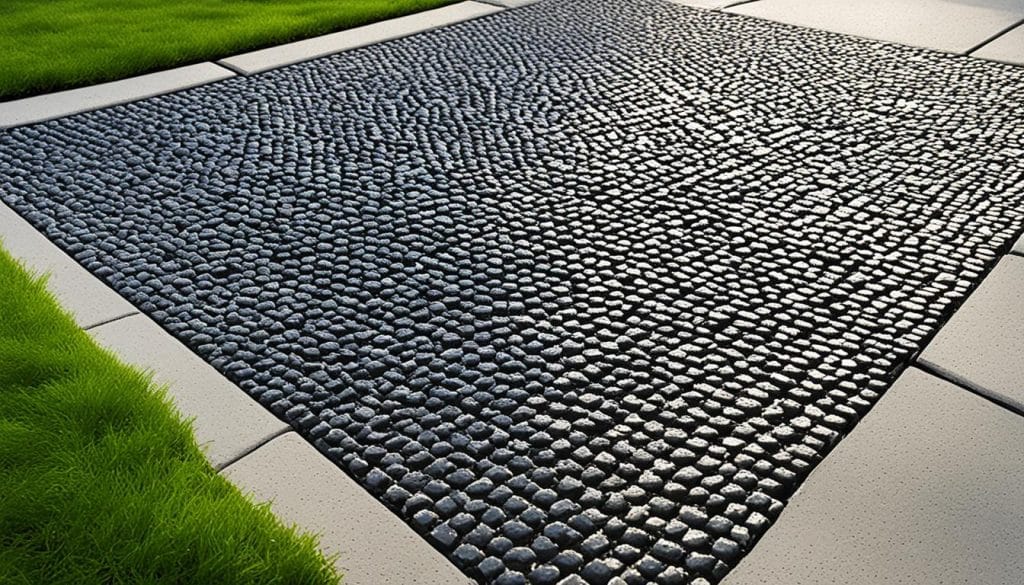
Paved areas with cement and asphalt make it hard for water to drain. This leads to puddles and a higher chance of floods. But, using permeable pavers can help solve these drainage problems in your yard.
Permeable pavers let water soak through to the ground. They have spaces that let the water pass, reducing runoff and puddles.
These pavers cut down on the heat island effect, refill groundwater, and support green landscaping. They’re an eco-friendly choice for your outdoor space.
There are many types of permeable pavers, like porous asphalt and grass. Some are great for driveways, and others for green areas. Each kind has benefits for different uses.
Permeable pavers also make your outdoor area look good. They come in many styles and colors, adding to your space’s beauty.
To upgrade your yard with permeable pavers, talk to a specialist. They’ll help you pick the right pavers and give tips on how to look after them.
Filling in the Low Spots
If you have small areas in your yard that dip lower than the rest, consider filling them. Use new topsoil or compost to do this. Compost is great because it loosens compacted soil and helps with drainage. Sometimes, bagged soil isn’t enough, so get soil by the yard since it’s more cost-effective for leveling those spots.
Adding the right amount of topsoil or compost to low spots can solve water pooling issues. This extra soil raises the low areas and improves your yard’s drainage.
When picking topsoil or compost, go for organic options full of nutrients and good microorganisms. These organic materials improve drainage and make your soil more fertile. This leads to healthier plant growth.
Before you start filling in the dips, make sure the area is clear. Remove any grass, weeds, or rocks. This will make the surface clean and smooth for the new soil or compost.
After filling the spots, level the surface with a rake or garden tool for even soil distribution. It’s key to compact the soil gently to avoid air pockets and make a firm surface.
Then, you can reseed or replant the leveled areas with grass or other plants. With everything at the right height, water drains evenly. This stops water pooling and makes your landscape healthier and more lively.
Using topsoil or compost to fill low spots is a smart, affordable fix for water pooling. It levels the surface and improves drainage, making your outdoor space look better and work better. Call Drainage First now for your free estimate at (678) 389-9544.
When to Seek Professional Assistance for Water Pooling in Yard United States
Some yard spots may be too big or need special tools to fix. If your yard has big uneven areas or major drainage problems, get help from a landscaper or soil expert.
These experts can find why water pools and suggest personalized fixes. They can also check your yard’s condition and may suggest grading or a drainage system if needed.
Regrading Your Yard
Water flowing toward your house needs attention. Professionals can reshape your yard to fix this. They change the land so water moves away from your home.
Seeing water gather in your yard often? Regrading could be the answer. A landscaper can adjust your yard’s slope for better drainage. This might include adding or taking away soil.
Regrading shapes your yard to let water flow smoothly. A drainage ditch or area is made to catch water. This stops erosion and protects your foundation.
Regrading is complex and needs pros. A landscaper can check your yard and plan improvements. They ensure your yard drains well after regrading.
Regrading stops water pooling and boosts your yard’s drainage. It protects your home and makes your yard look better. Talk to a pro about regrading your yard today.
Installing a French Drain
Having too much water in your yard or stormwater management problems? A French drain can be a great fix. It’s a drainage system that catches and moves water to a better place. It uses a pipe with holes, usually PVC or flexible plastic, in a gravel-filled trench. Call Drainage First now for your free estimate at (678) 389-9544.
The holes let water in, and the gravel keeps dirt out. This keeps the pipe from getting blocked. It’s important the drain slopes correctly to work well.
Got some DIY skills? You can buy a French drain kit and put it in yourself. If the problem’s big or the area’s tricky, better call an expert like Drainage First for help.
Building a Rain Garden
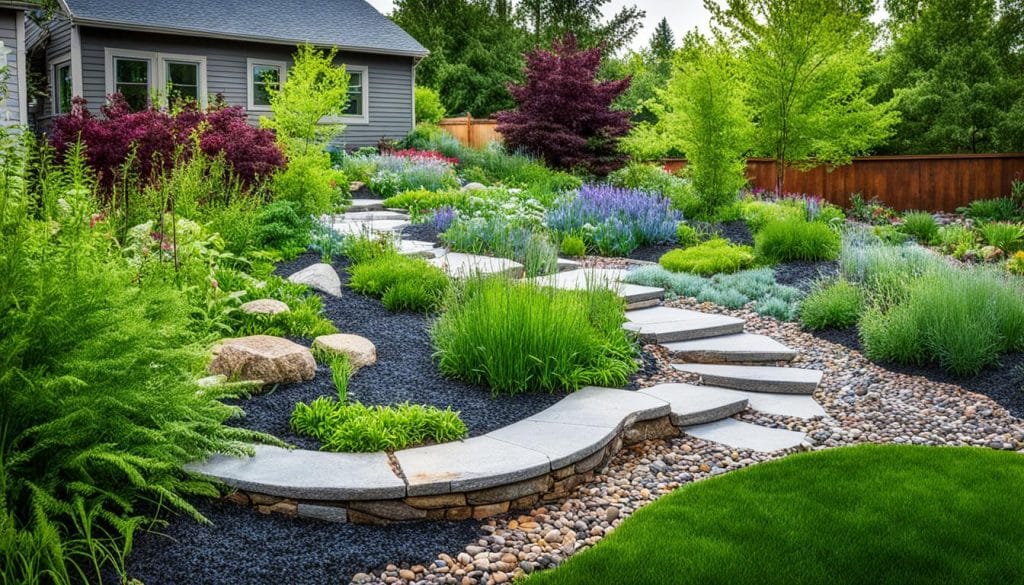
A soggy lawn after rain can be a problem. Building a rain garden is a great solution. This garden is a shallow depression that collects rainwater, letting it seep into the ground slowly.
One great thing about rain gardens is they clean the water. Using certain plants, these gardens keep pollutants from reaching our groundwater. This way, they play a big part in managing stormwater.
Choosing the right plants for your garden is key. Go for native plants that fit your area’s climate and soil. These plants do well in their natural setting and help local wildlife.
Creating a rain garden yourself can be very fulfilling. You can find many guides to help you design and maintain it. Adding a rain garden improves your yard and helps manage stormwater the green way.
Native Plants for Rain Gardens
It’s best to pick native plants for your rain garden. These plants are used to the local climate and water. They can handle wet conditions, making them perfect for rain gardens.
Some good plant choices include swamp milkweed, joe-pye weed, and cardinal flower. They’re pretty and attract pollinators like butterflies and bees.
You might also consider native grasses like switchgrass and little bluestem. They stop soil from eroding. Having plants of various heights and types will make your garden look good all year.
Replacing Your Lawn with Wet-Tolerant Plants
If your yard stays wet after it rains, think about changing your approach. Replace your lawn with plants that like wet soil. This will fix your soggy lawn issue and make your yard look great.
Many plants do well in wet soil and even like standing water. These plants are made for wet places. They pull oxygen from the soil and can handle lots of water.
Looking for the perfect wet-tolerant plants? Do some homework or talk to a landscaping pro. They can check your yard’s wet spots. Then, they’ll suggest plants that not only grow but also beautify your space.
Choosing plants that like water has many benefits. They soak up extra moisture and make your yard healthy and pretty. You also save time, work, and money without a regular grass lawn.
If a soggy lawn bothers you, think about getting wet-tolerant plants. Enjoy their beauty and toughness. Make your outdoor area a low-maintenance, water-loving spot.
Conclusion
Water pooling in yards can cause many issues. These include foundation problems, basement leaks, and damaged landscapes. It’s important to fix water pooling quickly to avoid more damage.
For homeowners in the United States with water pooling, Drainage First has affordable fixes. They know a lot about French drains, catch basins, and how to grade your land well. This means they can make sure water flows away from your property properly.
Don’t let water pooling stress you out. Call Drainage First at (678) 389-9544 now. Our team will solve your water drainage issues, protecting your home and easing your mind.