Do you know that ignoring your catch basin can cause expensive repairs and more flooding? How Do You Maintain a Catch Basin? Keeping your catch basin in good shape is key to managing stormwater and keeping your property safe and dry. You need to regularly check, clean, and fix any issues to avoid blockages and severe problems.
Understanding the role of catch basins and following maintenance tips can extend their life and improve their performance. This guide will help you with maintenance tasks. It ensures your drainage system can handle heavy rain and reduces water pooling on your property.
Key Takeaways
- Regular maintenance can significantly reduce the risk of flooding and costly repairs.
- Cleaning and inspecting catch basins at least once or twice a year is critical.
- Debris buildup is the main cause of clogs, more so in spring and fall.
- Proper care can prevent environmental harm like mosquito breeding.
- Catch basins should be at your yard’s lowest points for best performance.
- Annual or biannual professional checks may be needed, depending on local rainfall.
Understanding the Function of a Catch Basin
A catch basin is key for managing stormwater runoff. It collects rainwater and debris, stopping water from pooling. A 1-by-1-foot catch basin is good for small homes, showing it fits many needs.
What is a Catch Basin?
This system has a top grate to catch big debris and a sump below for sediments. Catch basins stop flooding and soil erosion, making them important for managing stormwater. They can be made from concrete, steel, or polypropylene, each with its own durability and upkeep costs.
Benefits of Proper Drainage
Using catch basins for drainage has many benefits. They can catch pollutants like sediment and oil, improving water quality. Well-maintained catch basins can cut down flooding by 30% in rainy areas. This also boosts property values and landscaping.
Common Issues with Catch Basins
But, catch basins can face problems like debris buildup and blockages. About 15% need fixing due to clogging. If ignored, they can harm water quality and ecosystems. Regular checks are key to keeping them working right.
For the best results, get professionals for installation and upkeep. This makes catch basins last longer and work better. Services like Drainage First offer expert help for stormwater management.

Importance of Regular Maintenance
Regular maintenance of catch basins is key for effective drainage and avoiding expensive repairs. A catch basin maintenance schedule protects property and helps local waterways by reducing pollution. Communities that focus on this maintenance can lower flood risks and extend their drainage system’s life.
How Often Should You Check Your Catch Basin?
Catch basins need an annual check to ensure they work right. In areas with lots of rain, cleaning before big storms is a must. Residential basins might need cleaning every two years, while commercial ones might need it two to four times a year.
In places with lots of pollution or construction, checking every three months is a good idea.
Signs Your Catch Basin Needs Attention
Several signs show your catch basin needs help. Standing water after rain means it’s not draining well. Debris, foul smells, and cracks are also warning signs.
Ignoring these signs can lead to bigger problems.
Potential Consequences of Neglect
Ignoring catch basin maintenance can cause big problems. Clogged basins lead to flooding, damaging streets and properties. This can cost over $10,000 if sinkholes form.
More flooding means more damage, sometimes up to 50% more during heavy rains. Keeping catch basins in good shape is vital for safety and the environment.
Step-by-Step Maintenance Guide for Catch Basins
Maintaining catch basins is key for good stormwater management and stopping flooding, mainly in parking lots. A step-by-step guide can make these systems last longer and work better. Here are important steps for upkeep.
Inspecting for Debris and Blockages
Regular checks are vital for catch basins. Start by looking for debris on the top grate and inside the sump. Make sure both inlet and outlet pipes are clear and working right. Finding debris early helps avoid big floods or damage later.
Cleaning the Catch Basin Effectively
Cleaning the catch basin well is important. For small amounts, manual removal works. But for bigger messes, vacuum trucks might be needed. High-pressure water can also clear out any left-over dirt. A clean catch basin prevents clogs and keeps stormwater flowing right.
Checking for Structural Integrity
Checking if the catch basin is structurally sound is also key. Look for cracks or damage. Fixing problems quickly keeps the basin working right. Regular checks help find and fix issues fast, protecting the drainage system.
Tools and Equipment Needed for Maintenance
Keeping catch basins in good shape needs the right tools and equipment. Using the correct tools makes cleaning more effective. It also keeps your drainage systems working well.
Essential Tools for Catch Basin Care
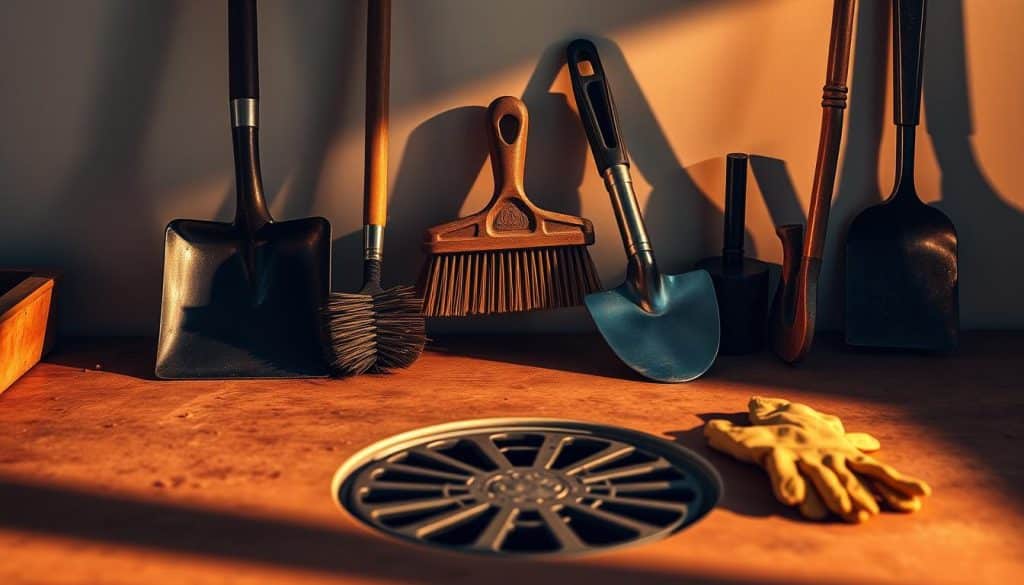
Important tools for catch basin care include debris scoops, buckets, and high-pressure water hoses. For basins with lots of sediment, a vacuum truck is key. These tools make cleaning faster and easier.
Recommended Cleaning Supplies
Choose eco-friendly cleaning agents, if possible. They’re good for the environment and effective against catch basin debris. Regular use of these supplies keeps basins working well and lasts longer.
Safety Gear to Consider
Safety is a top priority in maintenance. Wear gloves, goggles, and masks to protect against harmful debris. Using the right safety gear lowers the risk of injury during cleaning.
When to Call a Professional
Knowing when to call for professional catch basin cleaning is key. It can prevent big problems. Older homes often need catch basins for good drainage. If you notice frequent cleaning needs or issues, it might be time for a pro.
Signs You Need Expert Help
Standing water around your home could mean flooding. Wet grass and lots of mosquitoes are also warning signs. Mold or mildew in basements often comes from bad drainage. These signs mean it’s time to get expert help.
How Drainage First Can Assist
Drainage First is great at checking and cleaning catch basins. Their team knows all about drainage rules. They use the latest methods to fix problems and keep your system running right.
Benefits of Professional Maintenance
Getting professional help has many advantages. Experts use the right tools and know-how to avoid expensive fixes. A well-kept catch basin lasts longer and works better. This means your property value goes up.
The Role of French Drains in Drainage Systems
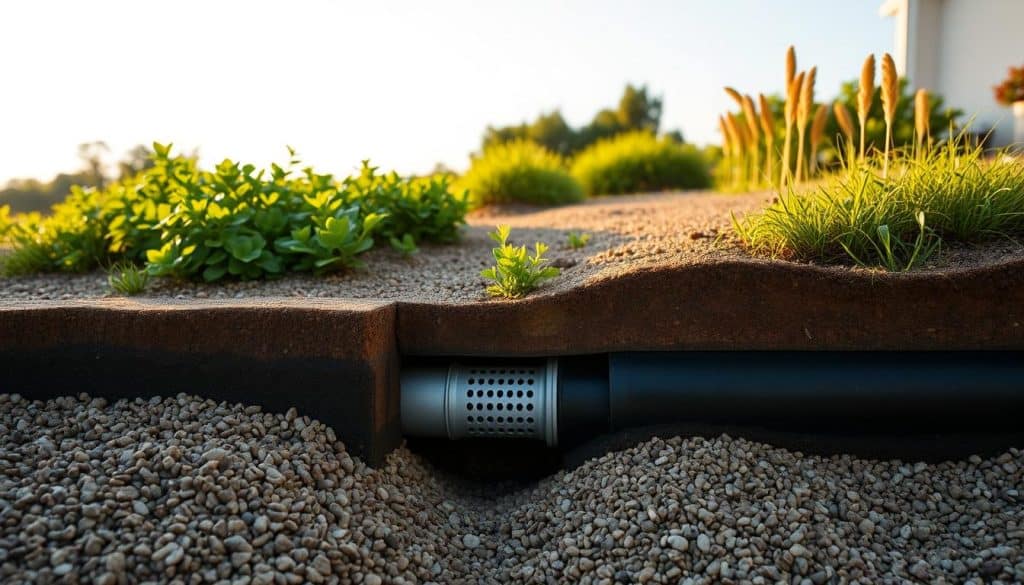
A French drain is key in managing water runoff and ensuring good drainage around homes. It has a perforated pipe buried in gravel. This design helps redirect water away from areas that might flood. Using a French drain well can greatly improve your property’s drainage.
What is a French Drain?
A French drain stops water buildup, which can cause basement flooding and damage foundations. It’s made with a trench filled with gravel and a pipe that lets water flow into it. Knowing how it works helps you see its role in a complete drainage system.
Advantages of Installing a French Drain
Installing a French drain has many benefits. It greatly improves your property’s drainage, protecting it from moisture problems like mold and structural damage. It also cuts down soil erosion by up to 80% in risky areas. Plus, it needs less upkeep than catch basins, usually every 3-5 years. These points highlight why French drains are vital in modern drainage systems.
Integration with Catch Basins
Working together, French drains and catch basins make a strong team for managing stormwater. Catch basins catch surface water, while French drains handle groundwater. This team effort boosts your drainage system’s performance, making it better at handling heavy rain.
Understanding Drainage Systems Around Your Home
Keeping your home safe from water damage is key. Good drainage systems help prevent flooding. This protects your home’s structure. Knowing why drainage is important is the first step to keeping your home safe.
Importance of Good Drainage
Drainage systems handle extra water well, stopping it from causing damage. If water gets into your basement or foundation, fixing it can be hard and expensive. About half of all property damage comes from bad drainage, so a good system is very important.
Types of Drain Systems Offered by Drainage First
Drainage First offers many drain systems, like catch basins, French drains, and dry wells. A catch basin is usually 12 feet by 12 feet and costs about $51. French drains and dry wells help manage extra water, fitting your home’s needs. These systems make handling stormwater better.
Preventing Water Intrusion with Drain Systems
Drainage systems designed and installed right can lower water intrusion risks. Catch basins catch and move stormwater away. Dry wells filter and manage water flow. Together, they keep your home dry and safe from moisture problems.
The Benefits of Exterior Repairs
Effective exterior repairs are key to protecting homes from water damage. They also improve drainage. By fixing water issues outside, homeowners avoid costly repairs inside. This saves money and keeps properties safe.
Why Outside Repairs are More Effective
Exterior repairs stop water from getting into homes and reduce flood risks. They help install strong defenses against heavy rain. This way, homeowners avoid expensive waterproofing systems and save money.
Common Exterior Repairs for Water Issues
Sealing cracks and adjusting soil grading are common repairs. They help prevent water damage and keep foundations strong. These steps reduce risks of foundation problems and soil erosion.
How to Implement Exterior Solutions
Start by checking your property for weak spots. Then, fix these areas and keep up with maintenance. This ensures your drainage system works well, avoiding future water problems.
Connecting Downspout Drainage to Catch Basins
It’s key to understand the role of downspout drainage in protecting your home’s foundation. Downspouts guide rainwater from your gutters to the ground or catch basins. These basins are vital for handling extra water, which is important in rainy areas. Without a good downspout system, your home could face water damage like mold, wood rot, and bugs.
Downspout Drainage Overview
Downspouts are a key part of your home’s drainage system. They move water away from your roof and prevent it from pooling near your foundation. It’s best to place catch basins 12 to 18 inches away from your foundation for good drainage.
Ensuring Proper Flow to Catch Basins
It’s important to make sure water flows right to catch basins. The pipes from downspouts should slope at least 0.25:10. This helps water move smoothly. If the pipes are not sloped right or get too much rain, water can pool and damage your home.
Maintenance Tips for Downspout Systems
To keep your downspout system working well, follow these tips. Check for debris to avoid blockages. Use extensions to direct water at least 10 feet away from your foundation. After big rains, clean out any sediment in your downspouts to keep water flowing.
Conclusion: Take Action with Drainage First
Choosing Drainage First for your drainage needs is a smart move. They have over 20 years of experience. They work hard to keep water out and your drainage systems working right.
Their affordable solutions include regular catch basin upkeep. This helps keep pollutants out and reduces flood risks. It also keeps your water clean.
Why Choose Drainage First for Your Needs
Drainage First offers custom drainage solutions for your home. They focus on managing water to prevent future problems. This saves you money on repairs later on.
By getting professional help, your catch basins get checked and cleaned regularly. This is key to a healthy drainage system.
Contact Information and Next Steps
Ready to improve your home’s drainage? It’s easy to start. Contact Drainage First for a solution tailored to you. They’re ready to handle everything from routine checks to complex issues.
Scheduling a Consultation at (678) 389-9544
Don’t wait for water problems to start. Call (678) 389-9544 to set up a consultation. Discuss catch basin maintenance or other drainage services today. Taking action now can secure a reliable drainage system for years.