Ever thought Can a Catch Basin Prevent Basement Flooding? Many homeowners struggle with water pooling around their property, causing expensive repairs and structural worries. Learning how a catch basin works and its role in managing water runoff is key to preventing basement flooding.
Catch basins collect and redirect water from driveways, sidewalks, and low spots. This helps prevent basement flooding. They manage rainwater, a major cause of home water damage. If you’re thinking about installing a catch basin or improving your property’s drainage, this info is very helpful.
Key Takeaways
- A catch basin collects and channels water, significantly reducing basement flooding risks.
- Proper installation and maintenance are key for good drainage.
- Regular gutter and downspout checks prevent blockages.
- Homes without good drainage systems face more flooding risks during rain.
- Catch basins can save a lot by avoiding expensive water damage repairs.
Understanding Catch Basins and Their Function
A catch basin is key in managing stormwater to stop flooding and protect homes. It collects unwanted water, making it a vital part of urban drainage. Knowing how a catch basin works helps homeowners see its role in preventing floods.
What is a Catch Basin?
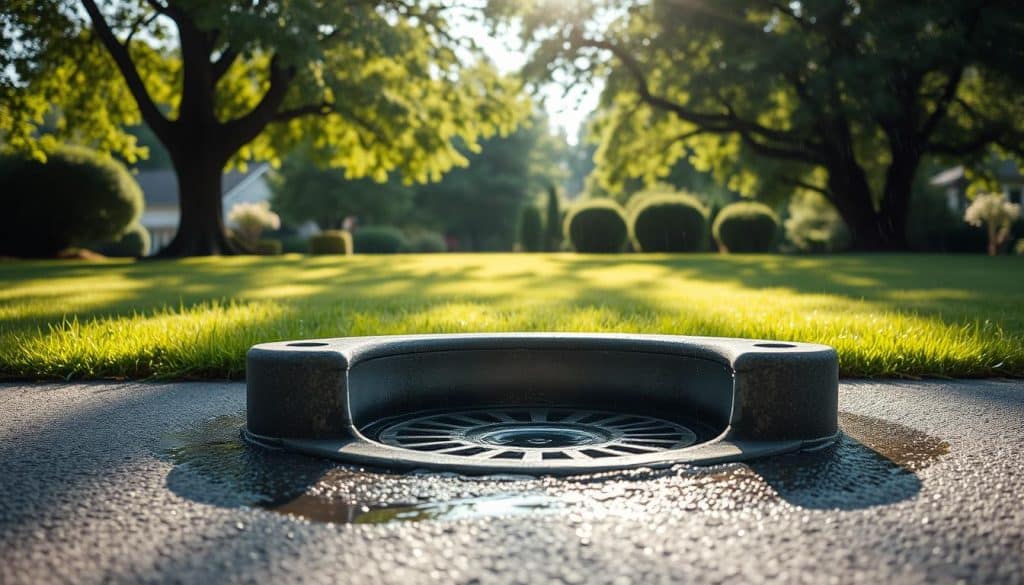
A catch basin catches runoff water, mainly in low spots. It has grates that let water in but keep out debris. This makes it effective in controlling floods by directing water into pipes.
How Do Catch Basins Work?
Catch basins catch rainwater and snowmelt in cities and countryside. They filter and redirect this water. This way, they lower flood risks by moving excess water into stormwater systems.
Common Locations for Catch Basins
Catch basins are found in homes, streets, parking lots, and flood-prone areas. In homes, a 1-by-1-foot catch basin is often suggested. It helps solve issues like standing water and bad smells. For more on drainage solutions, check this link.
The Importance of Proper Drainage
Knowing how to manage water is key for homeowners. Bad drainage can cause flooding, damaging foundations and basements. This damage can cost a lot, sometimes over $30,000. Good water management helps avoid these problems, keeping homes safe and sound.

How Poor Drainage Leads to Flooding
Poor drainage makes water pool, leading to flooding. About 15% of U.S. homes face flooding each year. Catch basins help manage rainwater, but neglect can cut their effectiveness by half.
Benefits of Effective Water Management
Good water management protects foundations and boosts property value. Solutions like channel drains and catch basins keep water away. Regular upkeep is vital to keep these systems working well.
Drainage Solutions
There are many ways to handle water issues. Catch basins, French drains, and smart landscaping are just a few. Using permeable materials and grading land can also help. For more info, check out this link.
Drainage First Approach
The drainage first approach is a smart way to handle water flow before using indoor waterproofing. It focuses on outdoor drainage systems to lower flooding risks. By investing in affordable drainage solutions, like better catch basins and slope designs, homeowners can keep water away from their foundations. This protects their homes from water damage.
Cost-Effective Drainage Solutions
Using affordable drainage solutions is key to keeping your home dry. It’s important to check and clean catch basins regularly, ideally once or twice a year. In areas with lots of rain or debris, you might need to do this more often. This helps prevent water buildup, bad smells, and flooding.
Why Drainage Comes Before Waterproofing
Going for a drainage first approach means tackling water problems at their source. Indoor systems can help, but they don’t solve the main issues. Catch basins can move stormwater away from your foundation, reducing risks. Without proper drainage, over 50% of basements can get water damage.
Common Misconceptions About Indoor Drain Systems
Many people think sump pumps alone can stop flooding. But, they can be expensive and not as good as a drainage first approach. Knowing about outdoor drainage solutions shows how vital they are for a safe home. They make your home more resistant to water problems.
Role of Catch Basins in Flood Prevention
Catch basins are key in preventing floods. They manage runoff by directing rainwater away from trouble spots. This keeps water from pooling during storms, lowering flood risks in homes and businesses.
These structures collect water and debris, making drainage systems work better.
How Catch Basins Redirect Water
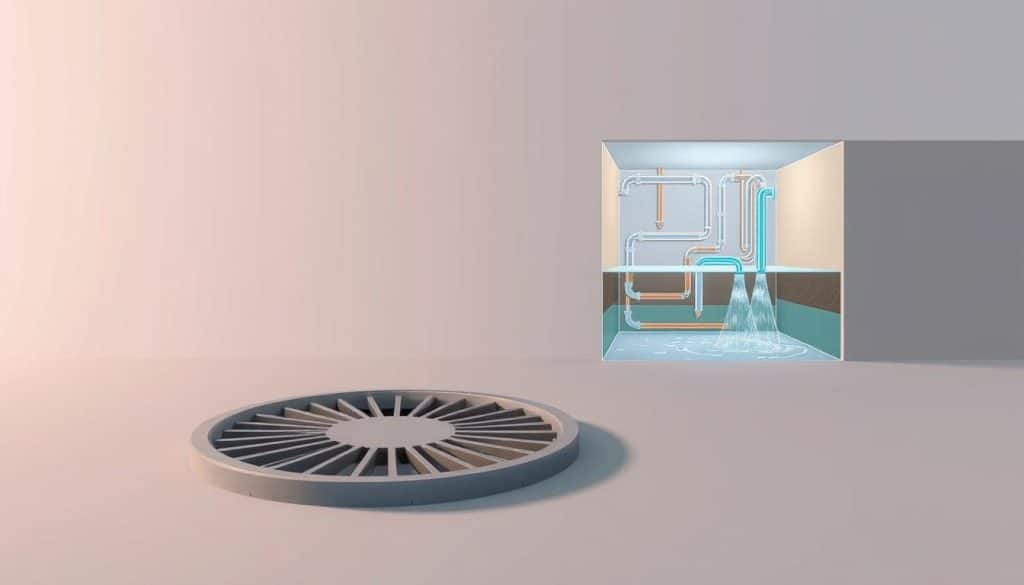
Catch basins capture stormwater and send it to underground systems. This reduces flooding pressure on streets and buildings. It’s important to clean them regularly to avoid clogs.
Ignoring maintenance can raise flooding risks by over 30%. But, well-maintained basins can cut flooding chances by about 60%.
Limitations of Catch Basins
Catch basins have their limits. They can get overwhelmed by heavy rain, if they’re not designed for large areas. Sediment buildup also affects their efficiency.
Regular maintenance is a must. It includes checking and cleaning basins. Without it, damage can cost a lot, with yearly costs ranging from $500 to $2000 for homes.
When to Consider Additional Drainage Options
If catch basins can’t handle runoff, it’s time to look at other options. French drains or retention ponds can help manage water better. They work alongside catch basins to keep water away from your property.
Services Offered by Drainage First
Drainage First offers a wide range of services to improve home drainage. They use innovative methods to prevent flooding and manage water runoff. This ensures property owners can rely on their quality and care.
French Drain Installation
The team excels in French drain installation, a key service to keep water away from foundations. Prices start at $500 for small jobs and can go up to $18,000 for bigger ones. French drains can move over 90% of water during heavy rains.
They recommend shallow trenches of 12 to 18 inches deep. A gravel base is also needed for the best results.
Foundation Repair for Leak Prevention
Foundation repair is essential to stop leaks from water. Even small leaks can become big problems, costing $15,000 to $30,000 to fix. Quick action can save a lot of money and protect your property.
Downspout Drainage Solutions
Drainage First also offers downspout solutions to manage rainwater runoff. These systems can cut basement moisture by about 45%, lowering flood risks. Homes with these systems have better drainage and less soil erosion, keeping landscaping intact.
Catch Basins vs. Interior Drain Systems
It’s important for homeowners to know the difference between catch basins and interior drain systems. Catch basins catch debris and pollutants from stormwater runoff. This helps prevent clogs in drainage systems. They are also cheaper to install than interior drain systems.
Interior drain systems are better for dealing with groundwater issues. But, they cost more and need more maintenance.
Comparing Costs and Benefits
Catch basins are cheaper to start with and need less upkeep. They help manage surface water well, preventing flooding. This is great for areas that get a lot of rain.
Interior drain systems cost more upfront. But, they are better for dealing with groundwater problems. They might be needed in areas with a lot of water underground.
Situations Favoring Each System
Each property has its own needs. Catch basins work best in areas with a lot of surface water. They are good for places that often flood.
Interior drain systems are better for dealing with groundwater. They are good for areas where the soil is always wet. The right choice depends on the local climate and soil.
Long-Term Effectiveness
The long-term success of drainage systems is key. Catch basins can manage stormwater well if installed and maintained right. They help protect properties from flooding.
Interior drain systems help with groundwater but need more upkeep over time. Homeowners should think about their needs and the long-term benefits of each system.
Identifying Signs of Poor Drainage
Homeowners should watch for signs of poor drainage to prevent damage. Water that doesn’t drain can cause problems. Look for standing water, damp spots, and water stains on walls.
Musty smells can mean mold, caused by too much moisture. This can harm your home’s look and structure if not fixed.
Symptoms of a Drainage Problem
Water pooling around foundations is a big sign. It happens a lot after rain. Without good drainage, water damage and bad yard looks can happen.
Erosion, puddles, or flooded yards are also warning signs. Keeping an eye on these can help protect your home.
Homeowner’s Guide to Diagnosis
Check how water drains after storms. Getting help from experts is a good idea. They can tell you what you need to fix the problem.
They might suggest things like French drains or catch basins. Acting fast can save your home from bigger problems later.
Why Exterior Solutions Are Preferred
Exterior drainage solutions like catch basins and French drains are key to managing water around your property. They stop water from getting into basements and save you from expensive damage. These solutions also make your yard look better and improve water quality in your landscaping.
Adding these structures can make your home safer and more appealing to buyers. It’s a smart investment for your property.
Benefits of External Repairs
Exterior drainage solutions offer lasting fixes for flooding. For example, catch basins stop rainwater from harming plants and causing soil erosion. They catch debris and pollutants, keeping your drainage system working well.
This reduces water damage and makes your home safer.
Effective Maintenance Tips
To keep your drainage systems working, follow some key maintenance tips. Clean catch basins regularly, check grates, and make sure they’re installed right. This will make your systems last longer.
Regular checks help keep water flowing and prevent clogs that can cause flooding.
Long-lasting Solutions
With the right maintenance, you can solve flooding problems for good. Well-kept catch basins and drains reduce soil erosion and landscape damage from too much moisture. Getting professional advice can make these solutions even more effective and long-lasting.
The Process of Installing a Catch Basin
Installing a catch basin is key for managing water, mainly in rainy areas. It involves several important steps for good drainage. Paying close attention to these steps helps the basin work well and last longer.
Step-by-Step Installation
The first step is to check the site for the best spot, usually 12 to 18 inches from the foundation. Then, dig a trench for the catch basin. After placing the basin, connect the drainage pipes.
Make sure the pipes lead water at least 10 feet away from the foundation. This setup helps manage water flow and prevents pooling.
Maintenance of Catch Basins
Keeping catch basins clean is vital to avoid clogs. If not maintained, clogs can cause flooding during heavy rain. Homeowners should regularly clean the basins to keep them working well and protect their property.
Cost Considerations
Installing a catch basin can cost a few thousand dollars, depending on size and location. Though it’s an investment, it saves money by preventing basement flooding and structural damage in the long run.
Testimonials: Satisfied Customers’ Experiences
Many homeowners talk about how reliable drainage systems keep their basements dry. They share stories of how catch basins saved their homes from flooding. These stories show that catching drainage problems early is key to solving them.
Real Stories of Flood Prevention
People in flood-prone areas tell of their relief after getting catch basins. One homeowner said their home went from a flood risk to a safe place. They credit regular upkeep and expert installation for their home’s safety.
Statistics back up these stories. Homes with good drainage systems see less water damage.
Common Themes in Ponding Solutions
Reviews highlight the need for early action and smart drainage designs. Homeowners who’ve fought off floods say their yards are safer and drier. They praise careful planning and quick action in solving ponding problems.
Contact Drainage First for Solutions
If you’re worried about flooding or drainage problems at home, it’s time to act. Reach out to experts in drainage solutions to protect your property from water damage. Drainage First offers homeowners personalized advice and new ways to handle excess water around their homes.
Get a Free Consultation Today!
Don’t wait to contact Drainage First for a free consultation on drainage solutions. Whether you need a catch basin or advice on yard grading, our team is here to help. We understand the urgency of preventing basement flooding, so reach out to explore your options.
How to Reach Us at (678) 389-9544
To talk about your drainage concerns, just call us at (678) 389-9544. Our experts are ready to share valuable insights and suggestions. Together, we can take the first steps to keep your home safe and dry.
Your Next Steps Toward a Flood-Free Home
Starting early is key to solving drainage problems. By contacting Drainage First, you’re investing in your home’s future. Simple changes like extending downspouts or installing a French drain can greatly reduce water buildup. Let us guide you in finding practical solutions for your home and landscape.